
Golden: the moment you light up again

Golden: the moment you light up again 03/17/2026 I was watching the 2026 Oscars ceremony and, among so many stories, speeches, and memorable moments, something stopped me: the song Golden. It wasn’t just the music. It was the feeling. A mix of emotion and nostalgia, as if something inside me remembered who I am… but also who I’m becoming again. And in that moment I understood something: it wasn’t the song. It was the moment. The music wasn’t telling me something new — it was reminding me of something I already knew: the time had come to light up again. And I asked myself: how long had I been dimming my light? You don’t switch off all at once… you disconnect little by little Nobody switches off overnight. It happens in silence, in small decisions that seem harmless: when you start adapting too much, when you choose to fit in instead of expressing yourself, when you postpone what moves you in order to fulfill what “needs to be done.” You gradually lower your intensity. You negotiate parts of yourself. You keep functioning… but you’re no longer vibrating the same way. And the most dangerous thing isn’t switching off. It’s getting used to the darkness. Maybe you recognize yourself in this: you keep showing up, you keep responding, you keep appearing… but something in you knows you’re not fully present. That there’s a version of you that’s more alive, more lit up, more authentic — waiting for you to let it out. You’re not broken. You’re not lost. You’re disconnected. And the good news is that what gets disconnected… can light up again. The Golden archetype: it’s not a song… it’s a calling Then I understood something deeper: Golden is not just a song. It is an archetype. It is that moment in life where something inside you says enough — not with anger, but with clarity. That turning point where: you stop seeking validation you stop justifying yourself you stop hiding your energy and you finally decide to come back to yourself Not because everything is resolved. Not because you have the path all figured out. But because you no longer want to stay dimmed. That is the real glow-up: not the one you see on social media, the one you feel in your chest. The moment you look in the mirror and recognize something familiar you thought was lost. That glimmer. That spark. That “here I am.” That is Golden. Rebirth is not starting over… it is remembering who you are Here is the part that has been hardest for me to understand — and also the one that has set me free the most. For years I believed that reinventing myself meant building something completely new. Changing my image, my environment, my narrative. As if the version that was me wasn’t enough, and I needed to replace it entirely. But today I see it differently. Reinventing yourself is not becoming someone else. It is stopping being who you are not. It’s not about adding layers. It’s about removing them. It is the patient and courageous process of discovering, beneath all the noise, beneath others’ expectations, beneath the masks you adopted to survive — who you really are. Robin Sharma expresses it with a clarity that stopped me in my tracks: “Greatness is not built. It is revealed when you stop hiding it.” And that changes everything. Because then the work is not about adding… it is about removing: Removing the mask you wear to fit in Removing the fear of disappointing those who don’t deserve you Removing the need for approval that makes you shrink Removing the borrowed versions of yourself you adopted to belong Removing the noise that pulls you away from your own voice And when you remove all of that… what remains is you. Not a perfect version. Not a finished version. But an honest version. A living version. A version that no longer needs to disguise itself to be accepted. That is what excites me about the process of being reborn: it is not a transformation imposed from the outside. It is a recognition that arises from within. Like when you hear a melody you knew by heart but had forgotten — and suddenly your whole body remembers it. That is what coming back to yourself feels like. You don’t arrive at a new place. You arrive home. 5 reminders to light up your Golden version again 1. You don’t need permission to come back to yourself There are decisions that are not announced. They are made. Coming back to yourself requires no external validation. It needs no applause, no perfect moment, no one else’s understanding. It only requires internal honesty — that quiet point where you say to yourself: “I am going to be who I am, even if it makes others uncomfortable.” And that decision, even if no one else sees it, changes everything. 2. Your energy is your true power You can lose your rhythm. You can momentarily lose clarity. You can feel like you’ve drifted too far to find your way back. But if you recover your energy… you recover everything. Brendon Burchard says it with a precision that resonates: “Your energy is your most valuable resource. Protect it, recharge it, and direct it with intention.” When you choose to move, to activate yourself, to take care of yourself — your energy comes back. And with it, your direction, your purpose, and your strength. 3. Evolving is uncomfortable… but staying the same costs more Growth rarely feels comfortable in the moment. Letting go hurts. Change is scary. Being seen differently is uncomfortable. But staying in a version of yourself that no longer represents you — that is what truly wears you down. Silently. Deeply. Growth doesn’t always feel good. But it always feels right. 4. Movement is what ignites the fire You don’t need to have everything figured out to move forward. Nobody does when they start. Tony Robbins
The invisible weight of being strong

The invisible weight of being strong 11/25/2025 The invisible weight of being strong There is a strength that doesn’t make noise. A strength that doesn’t boast, doesn’t shout, doesn’t demand applause. It’s the strength of those who keep moving forward even when not everything is in place. The strength of those who advance in silence, without telling everything, without asking permission. It’s that type of strength that Tony Robbins describes as “primary state”, when you choose to move forward not because of circumstances, but because of your internal decision. It’s not strength to prove something to someone; it’s strength to not betray yourself. The paradox of the strong There’s a moment in life when you realize that growing hurts… and that moving forward also hurts. And that both pains are inevitable. Robin Sharma says that deep change always begins with a “sacred disorder”. And he’s right. When you’re building a new life, when you go through ruptures, restarts, important decisions or unexpected transitions, a strange sensation appears: You can feel enthusiastic… and at the same time a bit lonely. You can feel expansion… and at the same time a small emptiness. You can feel clarity in your vision… but questions in your heart. They are not contradictions. They are signs of growth. The silence where strength is formed David Goggins says something that marked me: “You can’t be unstoppable if you’re scared to be alone with yourself.” And it’s true. There are stages when life puts you on social pause to strengthen your internal world. Not as punishment… but as training. Silence is not always absence. Sometimes it’s construction. Sometimes it’s alignment. Sometimes it’s life telling you: “Get ready. What’s coming will be big.” And in that silence, you discover that real strength is not what people see… it’s what sustains you when no one sees it. In this stretch of the road, where you advance, grow, adapt and rebuild yourself inside, there are truths that become indispensable. Simple truths, but deep ones, that sustain your step when everything around you is rearranging. Here I share with you five reminders that are giving me the most strength in this stage. The 5 reminders for when you carry the invisible weight of being strong 1. Strength is built with gentle steps Goggins says it straight: “You don’t stop when you’re tired. You stop when you’re done.” But not every day you have giant energy. And that’s okay. Discipline doesn’t always look like a sprint; sometimes it looks like a calm, but firm step. I learned that moving forward doesn’t mean gaining speed, but gaining direction. A difficult day doesn’t cancel all your progress. A small step is still a step. Progress doesn’t always make noise. Sometimes it just feels like “I made it today too.” 2. Being strong doesn’t mean closing your heart Sharma teaches that the deepest strength is soft, silent and human: “An open heart is an unstoppable warrior.” Emotional strength doesn’t consist of not feeling, but in feeling without losing direction. You can have sensitive days without ceasing to be powerful. You can have doubts without losing your vision. You can feel sadness without losing your progress. Being strong is not hardening yourself… it’s staying human without breaking. 3. Leadership begins when your internal world is ordered Simón Cohen summarizes it perfectly: “The quality of your energy determines the quality of your leadership.” You can’t project clarity if your interior is clouded. You can’t inspire peace if you’re at war with yourself. Leadership doesn’t begin when they name you a leader, it begins when you decide to master your own emotional state: Your breathing Your focus Your discipline Your intention Your thoughts When you lead yourself from within, the outer world responds. 4. Imperfect action is more powerful than perfect waiting When you doubt… act. There’s a moment when thinking no longer adds value, and waiting becomes self-sabotage. I’ve learned that clarity doesn’t come before movement… it comes because you moved. Tony Robbins summarizes it like no one else: “Action creates momentum.” When you move forward, even with doubts, life gets ordered, opportunities take shape, ideas mature, fear loses power. And it’s true. Clarity comes after the jump. The parachute is built in the air. Fear diminishes when you go through it. Imperfect action beats perfect analysis… Always. 5. Letting go of the past is not losing… it’s recovering your power The past has a very peculiar ability: it knows how to appear just when you’re about to move forward. It speaks to you in whispers: “What if the same thing happens to you?” “What if you fail again?” But those aren’t warnings. They’re echoes. Echoes of an old version that you no longer are. Letting go is not forgetting. It’s not erasing. It’s not denying what was lived. Letting go is rising above what was, to fully live what can be. Robin Sharma teaches it in his direct style: “You can’t build a new summit carrying the mountain you already climbed.” And he’s right. The past weighs when you carry it… but it strengthens you when you honor it, thank it, and leave it behind. Letting go is not an act of resignation. It’s an act of maturity. It’s an act of inner power. Because when you let go, you recover: Your energy Your vision Your emotional strength Your intention Your ability to love without fear Your ability to rebuild yourself Letting go is telling yourself: “I’ve already learned what I needed to learn. Now I continue.” Goggins would say it’s “building calluses on the soul”. Robbins would call it “interrupting the pattern and creating a new one”. Sharma defines it as “elegant detachment”. I simply see it like this: Letting go is not closing a chapter… it’s starting the book you really want to write. And that book can’t be written with your hands occupied with what’s already left behind. Final Reflection Today I understand that being strong has nothing to do with enduring everything.
The art of starting over
The art of starting over 11/08/2025 Leading even when you don’t have all the answers yet There are moments in life when you don’t decide to start over… life pushes you towards it. One day you realize that you can no longer sustain the chapter you’re in. Not because you’re weak, but because you grew. Because what once made sense stopped resonating with the person you are now. And suddenly, you’re there: facing a new beginning you didn’t ask for, but that invites you to evolve. For a long time I thought that starting from scratch was a defeat, today I see something completely different: I don’t start from zero. I start from what I’ve already learned. I start from my scars and my successes, from the self-love I denied myself for years, from the clarity that only comes when you truly let go of what no longer belongs to you. I don’t go back to the beginning: I return to myself. Has it happened to you that you know something must change, but you don’t move? Not because you don’t want to move forward… but because you don’t know where to. The mind demands certainty: it wants a perfect plan, ideal conditions, guarantees of success. But that endless search for “being ready” is another form of postponement. We disguise it as analysis, when in reality it’s fear. “He who doesn’t know where he’s going… has already arrived.” He has already arrived at the same result. He has already arrived at the same version of himself. He has already arrived at a destination he never wanted to choose. Recently, from this reflection, I made a decision: to move, even though I didn’t have all the answers yet. And curiously—or causally—people appeared on my path who are impacting the lives of thousands of people with vision, purpose, and discipline. I don’t believe in coincidences, when your intention is clear and your actions back it up, life opens doors. Starting over is not an act of breaking with the past. It’s an act of leadership with yourself: Leadership without applause, without an audience, without external validation. It’s looking at yourself in the mirror and asking: Am I being true to the person I want to become? When the answer is “no”, the beginning is inevitable. Starting over is not luck or accident. It’s architecture of the soul. First comes the discomfort that forces you to look inward, then the vision that points you to a new horizon, then the decision that moves you, the action that shapes you, and finally the liberation that makes you light to move forward. The 5 components of the art of starting over 1. You don’t start from zero. You start from everything you already are Starting over doesn’t take you empty, it takes you full of history. Your scars are not signs of defeat; they are diplomas of resilience. Likewise your mistakes don’t stop you; they refine you. Every experience, even the one that hurt, was training. Sometimes we forget that we have survived things that we previously swore we couldn’t endure. And yet, here we are. Brené Brown expresses it perfectly in her Netflix video: “Scars are evidence that we were greater than what tried to destroy us.” When you understand that, the fear of beginning disappears, because you know you’re not going back to the starting point. You don’t start from zero. You start from evolution, vision, and consciousness. And whoever starts with consciousness, has already started with an advantage. 2. Direction is worth more than speed You can run fast your whole life… and still not advance. Moving without direction is exhausting: It’s being busy, but not productive. It’s confusing activity with progress. There’s a saying that stayed engraved in my mind years ago: “It doesn’t matter how fast you go, if you’re going in the wrong direction.” Speed is action. Direction is vision. Tony Robbins calls it “clarity of purpose”, and he’s right when he says: “Clarity is power.” When you know where you’re going, it becomes easier: to say NO to what distracts, to say YES to what drives you, to move with intention, not with urgency. Sometimes we believe we need a perfect plan. But it’s not like that. What you need first is to choose a direction. Vision doesn’t always appear as a complete map; sometimes it comes as an internal whisper, as an intuition, as a certainty in the chest. An internal decision changes your external direction. And when the direction is clear, the pieces begin to fall into place: right people appear, doors open, obstacles lose strength. Because life favors those who know where they’re going, even if they don’t yet know how they will get there. 3. Leadership starts within you, not outside Before leading others, you need to lead yourself. You can’t inspire from internal disorder, nor guide from incoherence. True leadership is coherence. Simón Cohen explains it masterfully in Pleno: “Leadership that transforms is born from inner peace, not from the outer ego.” That phrase feels like a gentle blow to the ego. Because it doesn’t matter how many people follow you if you don’t follow yourself. It doesn’t matter how many results you obtain if you got them by betraying your values. Leading yourself means: Choosing what’s right when no one is watching. Being firm with your values when life tempts you to betray them. Being honest with yourself even when the truth is uncomfortable. It’s easy to lead when everything is calm, what’s difficult—and what defines you—is leading yourself when no one applauds you, when you’re in transition, when you don’t have all the answers. If to move forward you have to leave yourself behind, then that’s not the path. Because if you lose your values to get there faster… you didn’t arrive: you got lost. 4. Imperfect action beats perfect analysis The mind demands guarantees before moving, the heart only asks to start. You can spend days, months or years
The Invisible Price of Success

The Invisible Price of Success noviembre 1, 2025 I’ve often heard great thinkers say that we are the average of the five people we spend the most time with. That idea has stayed with me — and lately, I’ve made it a point to live by it. At least twice a week, I reach out to people who, in my eyes, embody true success. I’m not just talking about financial success, but about human success — people who live with purpose, who smile with authenticity, who stand firm even in the storm. Every conversation leaves me with something valuable: a phrase, a lesson, or a mirror that shows me where I stand and where I still need to grow. What I continue to learn from these talks is that they all share something in common: they’ve paid a price — a high, quiet, invisible price. One that isn’t shown on social media, but is etched in their character, their habits, and the peace with which they walk through life. Success is like an iceberg: everyone sees the tip — the applause, the results, the recognition. But what sustains it is much larger and deeper: sacrifice, doubt, sleepless nights, falls that nearly broke them, and choices that few people would understand. Society loves to celebrate the results, but rarely talks about the silent cost behind them — the cost that doesn’t show up in photos but shapes the person you become. That’s why today, I want to share what I’m still discovering The 5 inevitable components of the invisible price of success. 1. Discipline: The cost of future freedom Success isn’t built in comfort. It’s built through small, consistent decisions: getting up when you don’t feel like it, staying focused when no one’s watching, saying no to what’s easy so you can say yes to what matters. Robin Sharma, in The 5 AM Club, said it best: the discipline that feels like sacrifice today becomes the door to your freedom tomorrow. 2. Solitude: The toll of dreamers Choosing an uncommon path often means walking alone. Friends may not understand, family may doubt your vision, and many will tell you to quit. But solitude is also a filter — it separates the noise from your inner voice. When you learn to listen to it, solitude stops being a burden and becomes a space for clarity. 3. Criticism: The price of being visible Stepping forward means exposing yourself. I’ve faced criticism, judgment, even misunderstanding. But I always remember Aristotle’s words: “The only way to avoid criticism is to do nothing, say nothing, and be nothing.” Accepting that truth is liberating — it reminds me that I’m on the field, not in the stands. 4. Resilience: Paying with scars, not excuses Success isn’t about never falling; it’s about rising again and again. As Rocky Balboa said, “It’s not about how hard you hit. It’s about how hard you can get hit and keep moving forward.” Every scar I carry isn’t a defeat — it’s proof that I kept going. Each one tells a story of courage and perseverance. 5. Sacrifice: The highest and most valuable cost You can’t have it all. Success demands sacrifice — sometimes it’s time, sometimes comfort, sometimes relationships that no longer fit your path. But those sacrifices aren’t losses; they’re investments. Every time I choose purpose over immediacy, I’m building a life that feels aligned with who I truly am. Final Reflection What I’m learning is that success is never free. It’s paid for with discipline, solitude, criticism, resilience, and sacrifice. And while the price can seem high, it’s also what shapes me, transforms me, and keeps me in motion. The invisible price of success isn’t punishment — it’s the fire that builds character, the toll that validates dreams, the silent journey that doesn’t show up in pictures but defines who we become. True success isn’t just about reaching the top. It’s about refusing to stop walking — even when the price feels too high. And maybe, that’s the greatest victory of all.
The Value of Taking Risks

The Value of Taking Risks 10/10/2025 There are words that arrive like a whisper and, suddenly, make you stop. This week, during a morning walk, one of those words appeared in my mind: regret. And it accompanied me like an uncomfortable echo. Have you ever been haunted by that uncomfortable question of what would have happened if you had chosen differently at a key moment in your life? If you had dared to try one more time… If you had said that “I love you” that you silenced out of pride or fear… If you had given that hug that you still feel in your hands and that you never gave… If you had taken the step that could have changed your path… If you had made the decision that would open—or not—new doors… If you had had the courage to act following your intuition instead of staying still… As Melendi sings in his song El Arrepentido, many times we look back and feel the weight of what we failed to do. That song reminded me that regret can stay as ballast or become momentum. The choice is in our hands. Regret is like a rearview mirror: it invites us to look at what we left behind, but it also makes us imagine the paths we never took. And in those questions often hides the greatest learning: that what really weighs is not what you did wrong, but what you never tried. As Jim Carrey says: “You can fail at what you don’t want, so you might as well take a chance on doing what you love.” And it’s true. We live obsessed with minimizing risks, when in reality what we should minimize is regret. Because failure hurts for a while, but “what if I had tried?” can hurt for a lifetime. Today I understand that regret is not erased, but it can be transformed. It can become a teacher, a compass, fuel. That’s why I want to share with you what I call 5 reasons to take risks with purpose: not recklessly, not by force, but taking risks from intuition, passion, and the certainty that the attempt is worth it. 1. The river always follows its course Life is like a river: it flows. And along its path rocks appear, some small, others giant. You can stay lamenting the rock that blocks your way, or learn from the river: go around it and continue. The risk of moving forward is never as great as the cost of staying stagnant looking at what you couldn’t avoid. 2. The momentary pain, the eternal learning. Taking risks and failing can hurt. It’s also very uncomfortable to remain in the struggle when the easiest thing would be to abandon. Other times it’s terrifying to trust in what you feel even though the world doesn’t understand it. That pain is real, but it’s temporary. What’s eternal is the learning that remains afterwards. The peace of knowing you gave your best. Because even when the result doesn’t come, the attempt transforms you. 3. Taking risks is more valuable when success is uncertain The poem Arriesgarse says it clearly: “To laugh is to risk appearing foolish. To love is to risk not being loved in return. To try is to risk failure.” Today I understand that life is not a catalog of successes. It’s a collection of attempts. Those who take risks leave marks; those who always seek certainty usually stay on the shore of their own dreams. 4. Trying one more time can change everything Sometimes the biggest risk is not launching into something new, but daring to try again. J.K. Rowling received more than 12 editorial rejections before someone bet on Harry Potter. Amancio Ortega started with a small robe shop in Galicia; no one imagined that his persistence would lead him to found Zara and revolutionize fashion. To give a couple of examples. The common thread in these stories is not luck, but the decision to try again when the easiest thing would have been to give up. That’s the real lesson: regret weighs more than failure, but perseverance opens paths that previously seemed impossible. 5. The greatest risk is not living Viktor Frankl said it in Man’s Search for Meaning: whoever has a “why” can endure any “how”. The true risk is not losing, failing, or being rejected; the true risk is not daring to live with purpose. Taking risks doesn’t always ensure success, but it always ensures life, movement, expansion. Final Reflection What I discover on this journey is that regret is not an enemy, it’s a reminder of the paths I didn’t dare to travel. And it whispers to me that next time, I must jump, I must try, I must attempt it. A gift to close: Take a Risk (Taking Risks) (Poem attributed to William Arthur Ward) To laugh is to risk appearing foolish. To cry is to risk appearing sentimental. To reach out to another is to risk involvement. To expose your feelings is to risk showing your true self. To reveal your ideas and dreams before the crowd is to risk losing them. To love is to risk not being loved in return. To live is to risk dying. To hope is to risk despair. To try is to risk failure. But risks must be taken, because the greatest risk in life is to risk nothing. The person who risks nothing, does nothing, has nothing, is nothing, and becomes nothing. They may avoid suffering and pain, but they cannot learn, feel, change, grow, love, or live. Only those who risk are truly free.
Who packs your parachute?
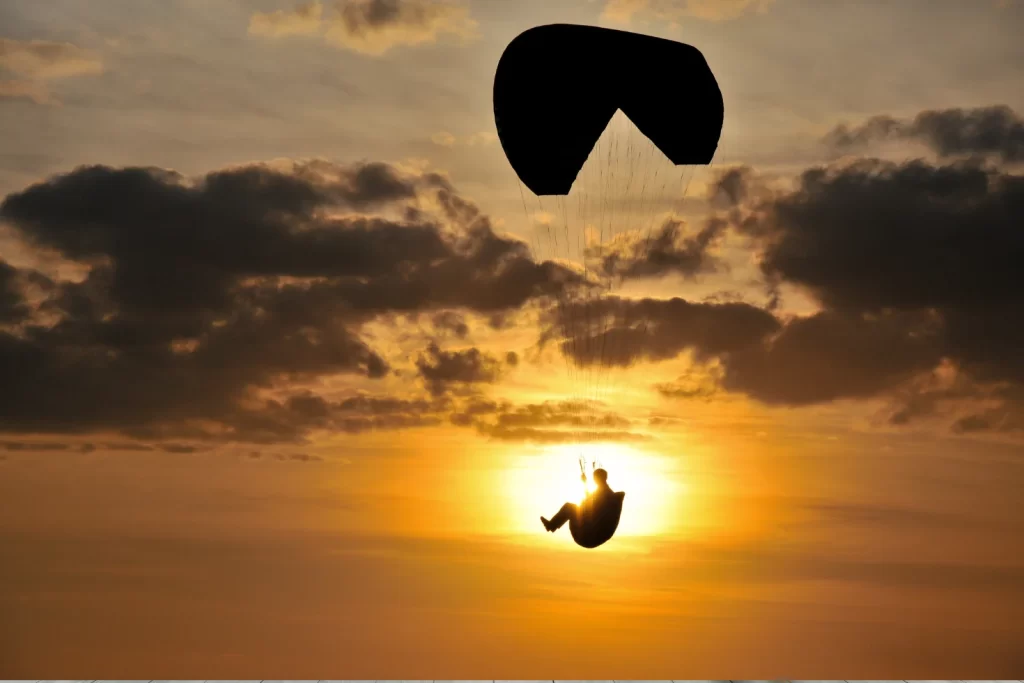
Who packs your parachute? 10/03/2025 In these last months I have tried to seek inspiration in stories that remind me of what is essential, what is important. It has been a very challenging year, and yet, I have discovered that the people who chose to remain close to me have been key to sustaining me and being able to move forward. Sometimes they don’t say it, but somehow they are there: listening, supporting, believing, praying, etc. In those gestures I remembered a story, and today it applies as the perfect metaphor in the life of Charles Plumb. Plumb was a combat pilot in Vietnam. After 74 successful missions, on mission number 75 his plane was shot down and he ended up spending six years as a prisoner of war (I can’t imagine what he could have lived through in those years). He survived thanks to the parachute that saved him from crashing with his plane. Years later, in a restaurant, a man was watching him from another table. Finally he got up, approached and said: “You are Charles Plumb. You flew planes from the Kitty Hawk and were shot down in Vietnam.” Plumb, surprised, asked him: “How do you know?” The man smiled and calmly responded: “Because I packed your parachute.” Plumb froze. He didn’t remember ever having seen his face. He was just another sailor on the deck of the aircraft carrier, a name lost among hundreds, who did his invisible work. But that night he understood: his life depended on the silent care of someone he never thanked. Since then, Charles Plumb shares a question that pierces the soul: Who is packing your parachute? That question is not just to applaud the story of a war hero. It’s for you and for me, here and now. Because we are all flying in our own “plane”: projects, dreams, businesses, families, challenges, health, etc. And all of us, sooner or later, face turbulence that forces us to open that invisible parachute. The powerful thing about this story is in what it awakens within us: recognize, thank, care for, and act from the awareness that no one flies alone. Today I want to share with you 5 reflections that this story leaves us and that we can apply in our personal, professional, and spiritual life. 1. Recognize those who make your flight possible The shine of your achievements is usually seen in public, but those who made your path possible are rarely recognized: parents, teachers, friends, partner, children, mentors, partners, even strangers who appeared at the exact moment in a certain situation. 👉 Teaching: Your success is never individual. It’s the sum of many invisible parachutes. 2. Real gratitude transforms your perspective It’s not the polite “thank you”. It’s stopping, looking back, and recognizing from the heart. Plumb spent sleepless nights after that encounter, thinking about how many times he walked next to that man without greeting him. Take advantage of any moment to be grateful for even the smallest detail, of those we take for granted like waking up each morning and being alive. Thank you, Thank you, Thank you. 👉 Teaching: Authentic gratitude is not kept: it is expressed, honored, and multiplied. 3. We all need several parachutes Plumb talks about other parachutes: the physical one he opened, the emotional one that sustained him in prison, the mental one that kept him lucid, the spiritual one that gave him hope. And all of us, absolutely all of us need these parachutes and perhaps many more. 👉 Teaching: Don’t neglect your internal parachutes. The economic one is important, but it’s not enough. Fullness comes from taking care of all your dimensions. 4. Your story can save others Plumb could have remained silent, but he chose to tell his story. What he lived through became a legacy. That’s how it happens with you and me, our experiences, even the most painful ones, can be the parachute for someone who today needs to believe, who today is in a nosedive. 👉 Teaching: When you share your truth, your story becomes a parachute that can give light, hope, and inspiration to others. 5. You also pack parachutes Every day you have the opportunity to be that anonymous sailor who, with their work, their word, their prayer, or their silent support, saves someone else. Maybe they’ll never tell you, but you can be certain that your impact can mean the difference between falling or flying again. 👉 Teaching: Your actions, even the smallest ones, can be the cord that opens someone else’s parachute. Final Reflection This year I have proven firsthand that there are people who packed my parachutes in silence: family, friends (some I hadn’t heard from in a while, and some new ones that have arrived), collaborators who decided to stay. Thanks to all of you I’m still in flight. My invitation: do two things today. 1. Recognize from the heart someone who packed your parachute. 2. Be aware that today you can pack the parachute for someone else. Because in the end, we are all in flight… and no one knows when they will need to open theirs.
Purpose in motion: staying firm when everything changes

Purpose in motion: staying firm when everything changes 09/26/2025 I always thought that purpose was like a final goal, a destination you reach and, once there, everything makes sense. Today I realize that it’s not like that. Purpose is not a fixed place, it’s more like a river: it flows, adapts, dodges the rocks, and continues its course. The rock may seem like an enormous obstacle, but the river never stops: it goes around it, embraces it, and moves forward with renewed strength. That’s how life is: true purpose doesn’t break with obstacles, it moves with them. One of the experiences that taught me the most occurred four years ago, in my first Half Ironman. During the cycling stage, a lady invaded the road and I ended up on the ground after a strong impact. The first thing I thought was: “this is as far as I go”. The bicycle damaged, my knees bleeding, the pain in every part of my body… it was the perfect excuse to quit. But then I imagined my children’s faces, and what it would mean to tell them I had given up because of a fall. So I repaired the bicycle as best I could, cleaned the wounds on the way, and continued. I finished the 90 km of cycling and, with effort and pain, ran the 21 km of the last stage. I crossed the finish line and completed my first Half Ironman. That day I understood that purpose is not arriving intact, but deciding to keep moving forward. Purpose is not static, because you’re not either. It’s alive, it transforms, it moves with you. And, as in the movie The Pursuit of Happyness, sometimes it’s measured in small acts of resistance, in not giving up even though you’ve lost everything, in taking one more step each day. Today I want to share with you 5 keys that are helping me keep purpose in motion, even when everything around changes: 1. Purpose is a compass, not a map In Neuro-Linguistic Programming there is a powerful phrase: “The map is not the territory.” And it applies perfectly here. A map can give you routes, but it never reflects the complete reality: the stones, the climbs, the storms. Purpose, on the other hand, works like a compass: it doesn’t tell you exactly how to walk, but it does assure you where to. Stephen Covey called it “begin with the end in mind.” For me, that end is not a rigid plan, but a clear direction. Today I understand that maps change, but the compass remains. 2. The real purpose is happiness I’ve chased achievements, numbers, recognitions… but with time I understood what Simón Cohen writes in Pleno: the true purpose is to be happy, as long as your happiness doesn’t destroy that of others.In The Pursuit of Happyness Will Smith plays a father who loses everything, but not his vision of giving his son a better future. That search sustains him. I’ve also felt what it’s like to lose a lot, and still discover that the only thing that keeps the strength alive is that internal compass of happiness. Today my question is not only “what do I want to achieve?”, but “what makes me happy in this process?” In The Pursuit of Happyness Will Smith plays a father who loses everything, but not his vision of giving his son a better future. That search sustains him. I’ve also felt what it’s like to lose a lot, and still discover that the only thing that keeps the strength alive is that internal compass of happiness. Today my question is not only “what do I want to achieve?”, but “what makes me happy in this process?” 3. From ambition to service Robin Sharma, in The Monk Who Sold His Ferrari, explains that the material can give you speed, but not direction. I’m learning it firsthand: what really gives meaning is not what I accumulate, but what I contribute. Serving—accompanying, inspiring, transforming—converts ambition into fullness. The difference between an empty life and a life with purpose is simple: in the first, what you do ends with you; in the second, it transcends in others. 4. Purpose in the everyday You don’t have to wait for a big project to live with purpose. Eckhart Tolle teaches in The Power of Now that transformation occurs in the present. I’m discovering that purpose doesn’t hide in great achievements, but in the everyday: listening attentively, supporting someone in silence, working with love in what I have today. Purpose in motion is not giant steps, it’s constant steps. And many times, those small steps end up being the most important. 5. A legacy in motion Viktor Frankl wrote in Man’s Search for Meaning that human beings can endure any “how” if they have a “why”. That “why” is the purpose. And what’s extraordinary is that it doesn’t end with you: when it’s shared, it becomes legacy. Today I understand that my purpose is not only to achieve personal goals, but to leave marks on the lives I touch: inspire someone to dream higher, encourage someone to take one more step, accompany someone to not give up. A shared purpose multiplies and becomes transcendence. Final Reflection What I discover today is that purpose is not achieved like a trophy. It’s lived, felt, breathed in every step. It’s not a goal at the end of the road: it’s the air that allows me to walk. And as long as I keep walking, I know that my purpose is in motion… since what makes us happy can change in each stage of life, and that’s enough. Purpose is not found: it’s lived, shared, and multiplied. Because when you walk with the compass of happiness in motion, your life fills with meaning, no matter how many storms come.
The power of vision: designing futures that don’t yet exist
The power of vision: designing futures that don’t yet exist 09/19/2025 When I was in high school, my mother gave me a card that I still keep. It said: “Overlook the obstacles you stumble upon and keep your eyes fixed on your ideal.” At that moment I didn’t imagine how much that phrase would accompany me. It was just a simple reminder, written on a card, but over time I understood that it hid a truth that would continue to be a compass in different stages of my life. Because vision is not something you understand all at once; it’s something you learn to live while you go through obstacles, doubts, and changes of course. Today I remain convinced that vision is that invisible thread that keeps us moving forward even when everything seems to be moving against us. Vision is what lifts us up after a fall, what allows us to see beyond the immediate, and what helps us remember that what we dream of deserves the effort of walking towards it. I’ve proven that when you lose vision, you lose direction. And when you lose direction, any wind drags you. But when you have your vision clear, even on the cloudiest days, you find strengths you didn’t know you had. I want to share with you what I’m learning and practicing today as my 5 keys to the power of vision: 1. See beyond the storm Obstacles are inevitable, but they are not definitive. Many times I encounter the temptation to focus only on what is in front of me: problems, criticisms, barriers. But then I remember that phrase from my mother, and it forces me to look up. Stephen Covey, in The 7 Habits of Highly Effective People, says: “Begin with the end in mind.” Vision is that end, that lighthouse that allows me to go through the storm without losing my course. I’m learning that when I focus my eyes on what I want to build, problems transform from walls into steps toward my destiny. 2. Transform vision into action A vision that is not translated into concrete steps becomes a distant dream. Tony Robbins expresses it clearly: “Clarity is power.” And that clarity is built by acting. I realize that dreaming is not enough: every day I must take a step, even if it’s small, in the direction of that vision. Sometimes it’s not the perfect step, but it’s movement. And as Robbins repeats in UPW: “Motion creates emotion.” The simple act of moving toward what I visualize gives me energy, strength, and confidence. 3. Inspire with images of the future A vision is not kept in a drawer, it’s shared. I’ve discovered that when I transmit what I imagine clearly, others feel inspired to walk with me toward that future. Simon Sinek, in Start with Why, explains it: people don’t follow what you do, they follow why you do it. Each time I make more effort to describe not only my goals, but how that future looks, what emotions it awakens, and why it’s worthwhile. When vision becomes tangible for others, it becomes collective energy. 4. Readjust the vision without losing direction I’m learning that vision is a compass, not a map. I don’t always have all the routes clear, and many times I have to change the plan. But what doesn’t change is the north. I’ve experienced how difficult it is to let go of a plan that seemed perfect, but I’ve proven that flexibility doesn’t mean weakness. It means that vision is alive and can adapt. Authentic vision doesn’t break with changes: it strengthens. 5. Live the vision as legacy Today I understand that the most powerful vision is not the one that ends when I achieve a personal goal, but the one that transcends and leaves a mark on others. Viktor Frankl in Man’s Search for Meaning says that human beings can endure any “how” if they have a “why.” I’m discovering that when I live my vision with coherence, I inspire others to find theirs. That is the true power: not only reaching what I dreamed of, but motivating others to dream higher and believe that it’s also possible. Final Reflection The power of vision is not in promising a perfect future, but in daring to design possible futures. It’s about learning to look beyond the immediate, even when the present doesn’t seem encouraging. That card from my mother remains in my album, reminding me that stumbles don’t define destiny, only the character with which I walk. Today more than ever I believe that vision is not an accessory for dreamers: it’s the force that turns the invisible into inevitable. Keep your eyes fixed on your ideal. Because when you do, you don’t just change your path: you light up the path of all those who dare to walk with you.
Living FULLY in a chaotic world

Living FULLY in a chaotic world 09/12/2025 We live in a world that applauds speed, accumulation, and visible achievements. Social media programs us to run faster, show more, and compare ourselves all the time. And yes, you can end up having the biggest contracts, traveling first class, surrounding yourself with applause… but if at the end of the day you can’t sleep in peace, did you really win anything? Simón Cohen lived it firsthand. He founded one of the most recognized logistics companies internationally. He had money, prestige, power. But inside, he was broken: stress, anxiety, a sick body, and an emptiness that not all the success in the world could fill. In his book PLENO he lays bare that reality and reminds us that fullness is not optional, it’s vital. When I read it, I connected with my own story. I’ve also been there: million-dollar projects, enormous responsibilities, decisions that mark lives. And I’ve also felt the weight of chaos, of pressure, of expectation. I’ve been an entrepreneur, father, friend, brother, son, coach… and in each role I’ve learned the same thing: without fullness, nothing is worthwhile. Today I want to share with you 5 teachings from PLENO that made me stop, question, and redefine what it really means to win in life. 1. Success without peace is defeat Simón achieved what many dream of and ended up hospitalized from stress. I’ve experienced firsthand how the weight of misunderstood success can rob you of your health and joy. 👉 Teaching: Success that takes away your peace is, in reality, an expensive defeat. 2. Gratitude changes the game Simón calls it his anchor. In the midst of all the chaos, being grateful for what he already had rescued him. I confirm it: gratitude has sustained me when everything seemed to be collapsing. 👉Teaching: Gratitude is not a spiritual trend, it’s a strategic muscle. 3. Leading from calm is the new power The old model of the yelling, controlling boss is dead. Simón learned it and so did I: when you lead fully, your team responds with real loyalty. 👉 Teaching: Calm is not passivity, it’s concentrated strength. 4. The body speaks what the soul silences Simón’s body made him pay until it forced him to stop. I learned the same thing: if you don’t listen to your body’s signals, life forces you to stop the hard way. 👉 Teaching: Your body is the thermometer of your fullness. Listen to it before it screams. 5. Fullness is not a destination, it’s a journey There is no end point where you say: “That’s it, I’m full.” It’s a daily exercise, a constant decision. Simón discovered it and shares it with courage. I live it every day. 👉 Teaching: Each decision brings you closer to or takes you further from your fullness. Fullness as legacy FULLY reminded me of something fundamental: it’s not about what you achieve, but about how you live what you achieve. Because there’s no point in building an empire if you do it from emptiness. Today I invite you to ask yourself with brutal honesty: “What I’m building, does it give me fullness or does it rob me of fullness?” That, and no other, is the most important exam of our life.
Decisions with scars: choosing when all options hurt

Decisions with scars: choosing when all options hurt 09/05/2025 There are decisions that seem easy: choosing a profitable business, taking a clear opportunity, moving forward when everything is aligned. But then there are the others: decisions with scars, those that involve losing something no matter which path you take, those that leave marks on the skin, in the heart, or on your reputation. In my life I had to face one of the biggest ones: leaving behind an entire stage and choosing a new path. It wasn’t comfortable, it wasn’t glamorous, and much less painless. It was making the decision to let go, knowing that on the other side there were no certainties, only the conviction that I deserved to start over. That choice split me in two: between what I was leaving and what I was willing to build. And yes, it left me scars… but it also gave me freedom. As I learned in Unleash the Power Within with Tony Robbins: “It’s your decisions, not your conditions, that determine your destiny”. And when you make difficult decisions with integrity, you may gain scars, but you also forge character. Here I share with you my 5 keys to decisions with scars: 1. Clarity is worth more than comfort Many times I postponed decisions hoping they would resolve themselves. Mistake. Indecision is the factory of exhaustion. I learned that when you define what is most important to you—your values, your principles, your vision—the decision becomes clear even if it doesn’t become comfortable. As Stephen Covey says in The 7 Habits of Highly Effective People: “The main thing is to keep the main thing the main thing.” 2. The cost always exists: embrace it. When I chose to start a new life, the hardest thing wasn’t what was ahead, but what I had to leave behind. Relationships, projects, routines that were part of my identity. Before, I wore myself out looking for the perfect way out, one where there would be no losses. Spoiler: it doesn’t exist. Today I accept that every decision has a cost and that embracing that cost with awareness is more valuable than denying it. That acceptance is what gives me peace after deciding. 3. Pain can be a teacher Leaving behind a stage hurts, and a lot. But I understood that pain is also a teacher: it taught me what I truly value and what I’m willing to protect in the future. Viktor Frankl in Man’s Search for Meaning teaches that suffering acquires purpose when we interpret it as part of growth. Today I know that my scars are reminders that I was capable of letting go of what no longer worked to make room for the new. 4. Courage is built in the act of deciding Don’t wait to feel courage to decide; decide, and courage will appear afterwards. When I dared to start over, fear was with me at every step. But I discovered that by acting, that fear transformed into energy. In UPW, Tony Robbins repeats it: “Motion creates emotion”. Courage is not the absence of fear, it’s action despite fear. 5. Scars become legacy. Today I see the scars of my decisions not as open wounds, but as marks of transformation. They are proof that I dared to choose, that I paid the price, and that I kept walking. Those marks remind me that I’m capable of starting over, and when I share that story, I inspire others to dare as well. Because in the end, scars don’t speak of what you lost, but of what you became after deciding. Final Reflection Deciding will never be a perfect act. There will always be costs, there will always be doubts, there will always be voices around giving opinions. But true leadership is forged at those crossroads where there is no clean path. Decisions with scars are the ones that remind us we are human, that we are responsible, and that, despite the pain, we move forward. And those marks, far from weakening us, turn us into references. Because greatness is not measured by the easy decisions you made, but by the difficult ones you faced with integrity… and by the new life you were capable of building afterwards.