
Purpose in motion: staying firm when everything changes
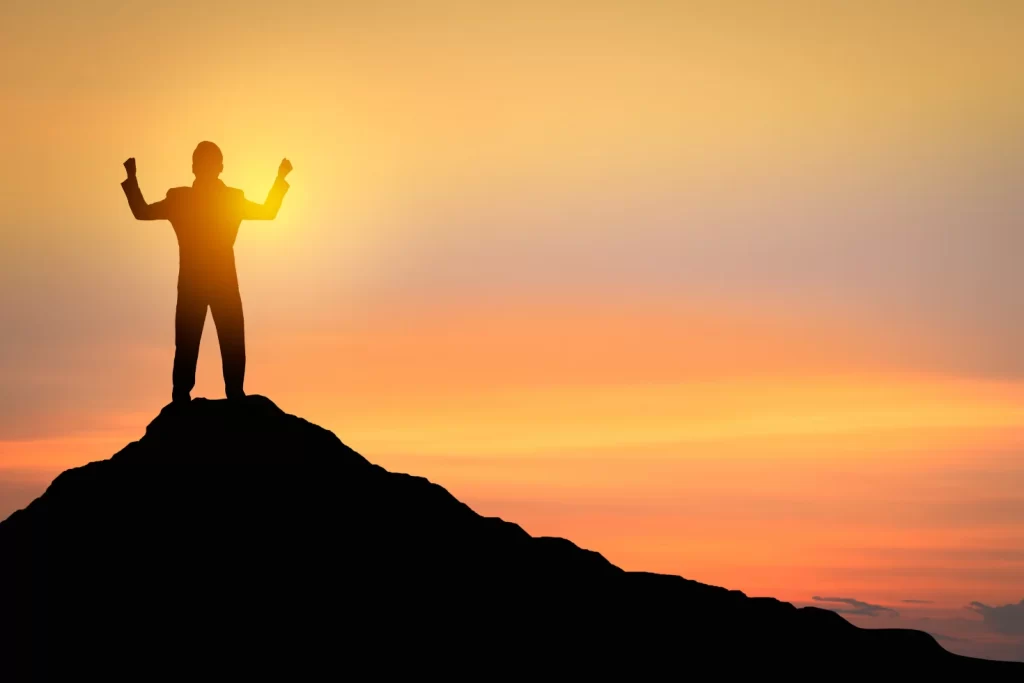
I always thought that purpose was like a final goal, a destination you reach and, once there, everything makes sense. Today I realize that it's not like that. Purpose is not a fixed place, it's more like a river: it flows, adapts, dodges the rocks, and continues its course. The rock may seem like an enormous obstacle, but the river never stops: it goes around it, embraces it, and moves forward with renewed strength. That's how life is: true purpose doesn't break with obstacles, it moves with them.
One of the experiences that taught me the most occurred four years ago, in my first Half Ironman. During the cycling stage, a lady invaded the road and I ended up on the ground after a strong impact. The first thing I thought was: "this is as far as I go".
The bicycle damaged, my knees bleeding, the pain in every part of my body... it was the perfect excuse to quit. But then I imagined my children's faces, and what it would mean to tell them I had given up because of a fall. So I repaired the bicycle as best I could, cleaned the wounds on the way, and continued. I finished the 90 km of cycling and, with effort and pain, ran the 21 km of the last stage. I crossed the finish line and completed my first Half Ironman. That day I understood that purpose is not arriving intact, but deciding to keep moving forward.
Purpose is not static, because you're not either. It's alive, it transforms, it moves with you. And, as in the movie The Pursuit of Happyness, sometimes it's measured in small acts of resistance, in not giving up even though you've lost everything, in taking one more step each day.
Today I want to share with you 5 keys that are helping me keep purpose in motion, even when everything around changes:
1. Purpose is a compass, not a map
In Neuro-Linguistic Programming there is a powerful phrase: "The map is not the territory." And it applies perfectly here. A map can give you routes, but it never reflects the complete reality: the stones, the climbs, the storms. Purpose, on the other hand, works like a compass: it doesn't tell you exactly how to walk, but it does assure you where to.
Stephen Covey called it "begin with the end in mind." For me, that end is not a rigid plan, but a clear direction. Today I understand that maps change, but the compass remains.
2. The real purpose is happiness
I've chased achievements, numbers, recognitions... but with time I understood what Simón Cohen writes in Pleno: the true purpose is to be happy, as long as your happiness doesn't destroy that of others.In The Pursuit of Happyness Will Smith plays a father who loses everything, but not his vision of giving his son a better future. That search sustains him. I've also felt what it's like to lose a lot, and still discover that the only thing that keeps the strength alive is that internal compass of happiness. Today my question is not only "what do I want to achieve?", but "what makes me happy in this process?"
In The Pursuit of Happyness Will Smith plays a father who loses everything, but not his vision of giving his son a better future. That search sustains him. I've also felt what it's like to lose a lot, and still discover that the only thing that keeps the strength alive is that internal compass of happiness. Today my question is not only "what do I want to achieve?", but "what makes me happy in this process?"
3. From ambition to service
Robin Sharma, in The Monk Who Sold His Ferrari, explains that the material can give you speed, but not direction. I'm learning it firsthand: what really gives meaning is not what I accumulate, but what I contribute.
Serving—accompanying, inspiring, transforming—converts ambition into fullness. The difference between an empty life and a life with purpose is simple: in the first, what you do ends with you; in the second, it transcends in others.
4. Purpose in the everyday
You don't have to wait for a big project to live with purpose. Eckhart Tolle teaches in The Power of Now that transformation occurs in the present. I'm discovering that purpose doesn't hide in great achievements, but in the everyday: listening attentively, supporting someone in silence, working with love in what I have today.
Purpose in motion is not giant steps, it's constant steps. And many times, those small steps end up being the most important.
5. A legacy in motion
Viktor Frankl wrote in Man's Search for Meaning that human beings can endure any "how" if they have a "why". That "why" is the purpose. And what's extraordinary is that it doesn't end with you: when it's shared, it becomes legacy.
Today I understand that my purpose is not only to achieve personal goals, but to leave marks on the lives I touch: inspire someone to dream higher, encourage someone to take one more step, accompany someone to not give up. A shared purpose multiplies and becomes transcendence.
Final Reflection
What I discover today is that purpose is not achieved like a trophy. It's lived, felt, breathed in every step. It's not a goal at the end of the road: it's the air that allows me to walk.
And as long as I keep walking, I know that my purpose is in motion... since what makes us happy can change in each stage of life, and that's enough.
Purpose is not found: it's lived, shared, and multiplied. Because when you walk with the compass of happiness in motion, your life fills with meaning, no matter how many storms come.